Showing posts with label New York Times. Show all posts

Tuesday, November 18, 2014

Sonya Yoncheva Heralded As Mimì At MET By New York Times

Ms. Yoncheva in rehearsal (Photo:
Jonathan Tichler/MET Opera)
"In the third act of Puccini’s La Bohème, Mimì, the tubercular seamstress, says goodbye. 'Addio,' she tells Rodolfo, her poet lover, at the end of the aria 'Donde lieta usci,' and then repeats it for emphasis: 'Addio, senza rancor.' Many Mimìs keep this moment simple, singing both iterations of 'addio' roughly the same. But at the Metropolitan Opera on Friday, the Bulgarian soprano Sonya Yoncheva first sang the word in a voice straightforward and resolute, trying desperately to project strength. The second time, she sounded wispy and vulnerable: a poignant revelation of her true feelings. Subtle, thoughtful and heart-rending, the passage seemed like the work of a veteran artist. But astonishingly, this was Ms. Yoncheva’s first staged performance of the role. Her delicate, dreamy, detailed Mimì has arrived more or less fully formed — and, for good measure, with less than two weeks’ notice and just a month after she gave birth to a son....Her voice is not huge, but her precise articulation of the text and the slightest metallic glisten in her warm tone allow it to penetrate. Her first-act aria built to a gently riveting reverie, and she grew in tragic stature as the opera went on, with her soft-grain echo of Rodolfo’s earlier melody a textbook lesson in tender nostalgia near the end. The rest of the performance was not at her level." [Source] Her debut recording, "Paris, Mon Amour," will be released on Sony Classics in January 2015.
As the delicate Puccini character Mimì in La Bohème, Sonya Yoncheva receives a triumphant review.

Wednesday, May 21, 2014

Arthur Gelb, Father of Peter Gelb, Is Dead At Age 90

Peter Gelb, left, with his parents Barbara and Arthur Gelb at the Metropolitan Opera in 2010.
"Arthur Gelb, who by sheer force of personality was a dominant figure at The New York Times for decades, lifting its metropolitan and arts coverage to new heights and helping to shape the paper in its modern era, died on Tuesday at his home in Manhattan. He was 90. His son Peter Gelb, the general manager of the Metropolitan Opera in New York, said the cause was complications of a stroke. Hired as a copy boy in 1944, Mr. Gelb rose to become a singular Times figure in the second half of the 20th century, leaving a large stamp as critic, chief cultural correspondent, metropolitan editor, deputy managing editor and managing editor, the post he held when he retired at the end of 1989. Mr. Gelb, writing for the culture pages, discovered stars in an expanding Off Broadway universe. His reviews and news coverage helped propel the fledgling careers of, among others, Woody Allen, Barbra Streisand, Dick Gregory, Lenny Bruce, Jason Robards, Joseph Papp and Colleen Dewhurst." [Source]

Saturday, January 25, 2014

Anna Netrebko's New York Apartment Has Plenty To Love

Anna Netrebko, wearing Oscar de la Renta, sits in the "Diva Chair" from Mackenzie-Childs with a painting by SoHo artist Hulbert Waldroup in the background on Beaujolais-colored walls. Read the full New York Times story by clicking here. (Photo: Fred R. Conrad)

Monday, December 30, 2013

Fun Insider Secret Onstage At The Metropolitan Opera

(Photo: Jonathan Tichler/MET Opera)
"Another small insider homage could be found on the stage of the Metropolitan Opera this month, in its lavish production of Der Rosenkavalier, by Richard Strauss. In the third act, after the boorish Baron Ochs’s attempted assignation at a tavern goes disastrously and hilariously wrong, he is besieged with bills from the innkeeper and a host of others. Invisible to the audience — whether sitting in the back of the Family Circle or the front of the orchestra — is what the long paper bills thrust at him actually say. In flowing cursive writing, the bills list the cast from the current production’s 1969 premiere, starting with the conductor, Karl Böhm, and naming everyone from Leonie Rysanek, who sang the Marschallin, to Christa Ludwig, who sang Octavian, to Charles Anthony, who was the innkeeper that night (and who sang some 2,928 mostly small roles at the Met during his long career). The tradition of these kinds of in jokes goes back centuries. Mozart’s Don Giovanni has an allusion in the last act to his own Le Nozze di Figaro." [Source]

Saturday, November 30, 2013

Designing Opera Costumes In The Digital Age Of High-Definition

Lisette Oropesa, who sings the role of Nanetta, fits herself in riding boots. (Photo: Todd Heisler/The New York Times)
The New York Times visits the Metropolitan Opera costume department to expose all the difficulties in recreating period costumes that can sustain the scrutiny of a high-definition camera. Taking a peak at the latest cast and costumes from Robert Carsen's new production of Verdi's Falstaff, the newspaper features a wonderful gallery of photos along with the story. "High-definition cameras are only the latest challenge for members of the Met’s costume department. As it is, their work requires a combination of finely honed technical skills, a historian’s understanding of period costumes, and personalized attention to opera singers, their performance style and body hang-ups. At the same time, Met costumes have to be much more durable than regular clothes. Unlike couture fashion, these garments must last for many seasons — sometimes decades — and withstand rapid costume changes between scenes. In the past, that might have meant sturdier zippers and thicker hooks, but with cameras trained even on the backs of singers, the Met’s designers, drapers and seamstresses have had to become craftier." [Source]

Sunday, August 4, 2013

Talented (And Adorable) Nick Phan Talks About Gay Britten

(Photo: Chester Higgins Jr./The New York Times)
"Grecchinois, the name of Nicholas Phan’s engaging blog, reflects the Greek and Chinese heritage of this 34-year-old American tenor, who has fast made a name for himself as an expressive interpreter of the British composer Benjamin Britten. Raised Greek Orthodox in Ann Arbor, Mich., Mr. Phan, who initially studied the violin and played in a youth orchestra, discovered Britten when he played his 'Young Person’s Guide to the Orchestra.' In college, as a gay man, he became fascinated with the relationship between Britten and the tenor Peter Pears, who lived together at a time when homosexual acts were illegal in Britain. He cites an experience performing Britten in a recital at Truman State University in Kirksville, Mo., around early 2006 as proof that the music, with its 'beautiful combination of head and heart,' speaks to audiences everywhere." Read the entire article by clicking here.

Sunday, April 14, 2013

New York on Sundays with Wagnerian Soprano Deborah Voigt

Soprano, and "Real Housewives of Beverly Hills" fan, Deborah Voigt at Cafe Luxembourg.
(Photo: James Estrin/The New York Times)
Read a wonderful capsule of soprano Deborah Voigt's typical Sunday in New York City, as featured in The New York Times, by clicking here.

Sunday, March 4, 2012

Latonia More Steps Into the Spotlight for MET Opera Debut

Ms. Moore in her house debut as Aida
(Photo: Cory Weaver/Metropolitan Opera)
"As often happens with cover singers at the Metropolitan Opera the soprano Latonia Moore had less than a day’s notice to take over a major part, in her case the title role of Verdi’s Aida on Saturday afternoon. Violeta Urmana, scheduled to sing, was ill. (Sondra Radvanovsky had filled in for her on Tuesday.) So with just some studio coaching sessions and no rehearsal onstage, Ms. Moore, a 33-year-old Houston native, made her Met debut in the last performance of the revival of the company’s 1988 production this season, with Marco Armiliato conducting. The audience loved her. When Ms. Moore took her solo curtain call at the end, she received an ecstatic ovation." [Source]

Thursday, December 1, 2011

Caroline H. Dworin Explores a Childhood Filled With Theatrics
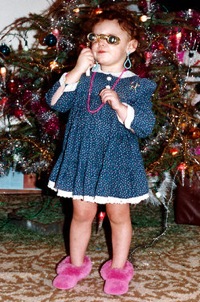
Caroline as a child with opera glasses
"Both our parents worked in the theater, and my father, a stage or company manager in the West End, could never leave his work behind. He returned to our home like a magpie, with the strangest objects in his beak. Backstage remnants became part of our lives. When a show ended its run, scattering its cast and crew onto the street, and occasionally leaving him jobless, he would be cheered by the recovery of leftovers, any props or trinkets he could snare. My mother indulged this. We had a black feather boa, and a cane and some opera glasses that both once belonged to Hermione Gingold, and a replica bottle of Moët & Chandon, which opened from its middle to become part cigarette holder and part music box. The piano I played was once used in a Gershwin review. There was a .32-caliber starting pistol that fired blanks offstage in Act II of A Little Night Music, and in our mother’s wardrobe, buried out of sight, hung a fox fur stole with the face still on it. When bored or in search of danger, I would hunt it down, take it in my hands and look it dead in the eye. It looked right back at me with its dreadful, flattened scowl." [Source]

Hermione Gingold in her U.S. opera debut as The Duchess of Krakenthorp in La Fille du Régiment at the San Francisco Opera in 1974. The cast included Beverly Sills, Spiro Malas, William Harness and was conducted by Anton Guadagno. The production was by Lotfi Mansouri and the performances were sung in English.

Friday, November 18, 2011

Jay Hunter Morris: Practice Makes Perfect As Wagner Tenor

Heldentenor Jay Hunter Morris finally getting deserved recognition. (Photo: Stephanie Diani/NYTimes)
"As a boy growing up in Paris, Tex., Mr. Morris — he blurs his age as 'mid-40s' — had music on both sides, his father a Southern Baptist music minister, his mother the organist at First Baptist Church. He had never heard opera until he moved to Dallas and saw La Traviata. 'She is laying on her back and she has no microphone and she’s singing,' he said. 'How do they do that? I decided to take lessons and see if I have a voice for this.' To be self-critical without being self-destructive may be the single most valuable trait of adult life. Mr. Morris says he does not have the tenor quality 'where I can just open up and be glorious,' but he cops to being persistent. 'It’s sort of like shooting free throws over and over to get them right,' he said. 'There are things that my voice teacher has been telling me for the last 15 years, and I’m just now getting them. I want to be really good at this someday. I’m getting there, but I’m not there yet.'" [Source]

Monday, October 24, 2011

The Stage Offers One Last Kiss to Mezzo-Soprano Rosalind Elias

As Heidi Schiller in Follies.
As previously discussed, the American-born Lebanese mezzo-soprano opera star is currently in the revival of Follies. The New York Times writes a wonderful piece on this great artist: “The ageless mezzo-soprano Rosalind Elias had never heard a note of Stephen Sondheim’s score for Follies when her agent first approached her about auditioning for the small, poignant role of Heidi Schiller, which she is now playing to acclaim in the popular revival at the Marquis Theater on Broadway. Ms. Elias was no Sondheim neophyte. She sang Mrs. Lovett in the New York City Opera’s 1984 production of Sweeney Todd and appeared as the sardonic grandmother Madame Armfeldt in a production of A Little Night Music in Hawaii. But she knew of Follies only vaguely and could not imagine what role could be right for someone 'at my stage,' as she put it during a recent interview in her Manhattan apartment, where she lives with her husband of 42 years, Zuhayr Moghrabi, a lawyer and law professor. “My agent, Michael Rosen, said that there was a song in the score that would be wonderful for me,” Ms. Elias recalled. That song, 'One More Kiss,' is a waltzing avowal of love and farewell written in the soaring lyrical style of Sigmund Romberg. And Ms. Elias adores it. 'I know Stephen Sondheim wrote that song in 1971,' she said, 'but I swear, I feel he wrote it for me.' She went to that audition, sang 'One More Kiss' and knocked out the director Eric Schaeffer. 'I had never heard
An early promotional photo of Elias.
her perform in opera, I’m sorry to say,' Mr. Schaeffer said recently. 'But I knew of her. When her name came up, I thought, ‘Oh my God, that would be amazing.’ She came and sang. I was literally in tears. I was, like, ‘Cast her!’ I called Steve. He agreed.' In 'One More Kiss' Heidi enters into her world of ghosts, Ms. Elias said. 'I feel this is her swan song,' she said. 'Lover, give me one more kiss, and ‘never look back.’ But I think the lover is her career. 'I’m still shocked I’m in Follies,' Ms. Elias added. 'You never know what’s around the corner. It is one more kiss that’s been given to me.'" [Source]

Watch an early performance of Ms. Elias singing the title role of Carmen in 1958 and her current role of Heidi Schiller in Follies after the jump. There is also an interesting bit of trivia as well as one fabulous promotional photo of Ms. Elias from her days with Columbia Artists Management.

Tuesday, September 13, 2011

Perry Street Was Flourishing Romantic Mecca For Love & Art

Far and Away: Harold Eliot Leeds and
Wheaton Galentine NOT on Perry Street.
(Photo: Harold Leeds Estate)
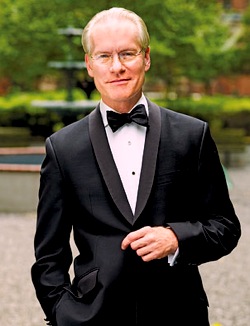
"The house where Carrie Bradshaw lived, supposedly on the Upper East Side but actually at 66 Perry Street in the West Village, still draws a steady stream of Sex and the City fans. They snap photos of the row house, which was built in 1866, as if to partake in the fictional life of a New York writer and the foibles of her quest for lasting romance. But a real New York romance played out at the house next door, No. 64, whose plainer facade served as Carrie’s building for the first three seasons of the show, said Tim Gunn, the fashion executive who lived in an apartment there for 16 years. It lasted almost six decades, linking two men from their first meeting at the Rockefeller Center skating rink during World War II until one of them, Harold Eliot Leeds, an architect and professor of interior design at
Sirens of Perry Street: Carrie Bradshaw on left (played by
Sarah Jessica Parker) and Tim Gunn on right.
Pratt, died in 2002. Inasmuch as Sex and the City opened a window on a certain kind of life in New York, so too does that town house, now on the market for $8.5 million, with its connection to a Village that persists only in memory and imagination, a place that was a magnet and haven for people living outside the mainstream at a time when the idea of two men, or women, marrying was inconceivable....Mr. Leeds, who designed the Paris Theater, the Caribe Hilton in San Juan and Martha Graham’s dance studio, and Mr. Galentine, who made documentary films, many focused on architecture, turned their visual sensibilities toward the house, restoring its architectural features but adding distinctive modernist furnishings. Over the years, Mr. Leeds, who is remembered as a big man with a big,
The most famous exterior on
Perry Street today: Number 66 .
broad personality, taught interior design at Pratt Institute in Brooklyn, where he helped establish the graduate school of interior design. Mr. Galentine was quieter, but possessed what the couple's longtime neighbor described as a puckish sense of humor. Endlessly hospitable, the two liked to entertain, playing host to neighbors stopping by for tea or a cocktail, and having dinner parties with the artists, writers and poets who populated their neighborhood, talking about opera or ballet or the theater. They also liked to travel, Mr. Skovgaard said, to Martha’s Vineyard, all over Europe and eventually Southeast Asia." [Source]

Friday, September 2, 2011

Zachary Woolfe Recommends Cavalli's Mega-Hit "Giasone"

Jason & Medea (Giovanni Crosato)
Writer Zachary Woolfe makes a recommendation for New Yorkers in today's edition of the Times: "Opera Omnia (Friday, Saturday, Tuesday and Wednesday) Giasone, which had its premiere in Venice in 1649, was Cavalli’s most popular opera in his own time but is a rarity now. That’s a shame, as it features gorgeous music, complex characters and a knowing libretto that treats the story of Jason’s quest for the Golden Fleece with a mixture of emotion and absurdity. This excellent young company is mounting it (in English) in a production directed by Crystal Manich and conducted by Avi Stein, with a cast that includes the dazzling mezzo-soprano Hai-Ting Chinn as (who else?) Medea. At 7 p.m., Le Poisson Rouge, 158 Bleecker Street, near Thompson Street, Greenwich Village, (212) 505-3474, lepoissonrouge.com; $30 for general seating, $15 for bar/mezzanine seating." [Source]


"Delizie, contenti" Giasone (Cavalli) sung by René Jacobs
"Dell'antro magico" Giasone (Cavalli) sung by Gloria Banditelli
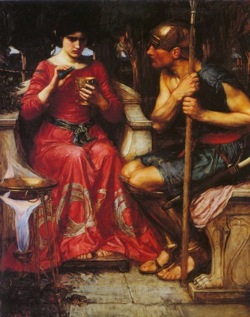

Jason and Medea (John William Waterhouse)
"Opera Omnia presents Francesco Cavalli's Giasone, fully staged in English translation, as a long overdue follow-up to Opera Omnia's sold-out run of Monteverdi's Coronation of Poppea in 2008. Giasone was the most popular opera of the 17th century; this raucous telling of the Jason and Medea myth features tortured lovers, a bitter old maid, a buffoon servant...and a stuttering hunchback. Using a style that incorporates commedia dell'arte and cabaret, Opera Omnia's version of the quest for the Golden Fleece is sure to delight. Returning Opera Omnia cast members include Hai-Ting Chinn (Medea) and Cherry Duke (Jason), who will be joined by Kathaine Dain (Hipsipyle), Karim Sulayman (Delfa), and Nathan Baer (Besso), with music direction by Avi Stein and stage direction by Crystal Manich, produced by Wesley Chinn. [Source]

Watch some videos featuring Hai-Ting Chinn after the jump.

Friday, August 19, 2011

Zachary Woolfe Explores "Charisma" in Opera Singers

Mirror, mirror on the wall, who is the most
charismatic of them all?
Maria Callas photographed by Angus McBean.
"Charismatic performers are those whom you simply can’t look away from. Their charisma is an almost physical presence, a spark that powers even the most unassuming musical passage. To experience a charismatic performance is to feel elevated, simultaneously dazed and focused, galvanized and enlarged. It is to surrender to something raw and elemental, to feel happy but also unsatisfied. Charisma calls forth a melancholy, a vaguely unrequited feeling. I’ve caught myself, after certain performances of an aria or a movement, leaning forward, as if drawn against my will. Charisma requires that you acknowledge a new, larger set of possibilities. It is demanding. We are told of Callas’s overwhelming use of her body and voice onstage. As Schonberg added, of that 1965 Tosca, 'the stage presence shown by Callas in her performance would have raised the hackles on a deaf man.' The question is whether people want to be swept up. Charisma can be exhilarating but also frightening. Our surrender to it demands a trust that is not easily conceded. If our desire from performance is only for comfort and reassurance, charisma will repel us. It is about revealing scope, and it raises the stakes dangerously high....Recently I was in the Met Opera Shop, and a video clip came on the screen above the CD racks. The longtime Met soprano Aprile Millo was singing 'La mamma morta,' the ecstatic aria from Giordano’s Andrea Chenier, with burning intensity. The sales clerk and I both watched raptly. Later I e-mailed Ms. Millo to ask her what charisma is. 'Hemingway gave us a haunting clue to it,' she replied. 'In his obsession with the Spanish bullfights, he spoke of the lust of the crowd and its desire to feel something special, a raw authenticity, even in so brutal a setting. What he mentions is the hush that would come over the crowd at the entrance of the toreadors. The people could sense the difference between those who did it for the fame, the paycheck, and those who had the old spirit: the nobility, bravery, heart, ‘duende.’ I believe this also happens in the theater. The crowd can sense the one with the authentic message, the connection to the truth.'" [Source]

Saturday, August 6, 2011

Mezzo-soprano Kate Lindsey Is Officially Married

The Newlyweds
(Photo: Meghan McMackin/NY Times)
"Kate Lindsey, a daughter of Nancy R. Lindsey and the Rev. Richard H. Lindsey Jr. of Richmond, Va., was married Saturday afternoon to Landon John Jones, a son of Cathryn M. Jones and Martin J. Jones of Carbon, Iowa. Ms. Lindsey, 30, is keeping her name. She is a mezzo-soprano who this year sang the role of Nicklausse in Offenbach’s Les Contes d’Hoffmann at the Metropolitan Opera, with which she is a principal artist and where later this year she is to appear as Hansel in Humperdinck’s Hansel and Gretel. In June, she sang in Mozart’s Idomeneo at Théâtre des Champs-Élysées in Paris. She graduated from Indiana University. The couple met in April 2010 when Dr. Jones, far from an opera buff, agreed to play tour guide to Ms. Lindsey, then preparing to perform in the title role of the Seattle Opera’s Amelia, a new work. He did so only as a favor to his best friend, who also happened to be Ms.
Lindsey in Amelia
at Seattle Opera.
Lindsey’s sister-in-law. 'I had been to an opera in Houston,' he said. 'It was three hours, and it couldn’t be over soon enough.' After he and Ms. Lindsey had gone on two platonic hiking trips, Dr. Jones could not get her out of his head. 'I’m getting flyers of the Amelia opera in the mail,' he remembered. 'I’m seeing her face everywhere on posters.' When she opened in Amelia that May, he decided to give opera another chance, and then built up the courage to ask her a few days later to go on a kayaking date with him. 'It was our first real date,' he said." [Source]


Monday, August 1, 2011

Deborah Voigt: Alcoholism, Obesity, Suicide Despair, Vocal Decline

Opera singer Deborah Voigt has collaborated with playwright Terrence McNally, director Francesca Zambello and pianist Kevin Stites, to create an autobiographical one-woman show titled "Voigt Lessons" which features 18 pieces of music to accompany her timeline. It premiered on last Friday at the Glimmerglass Festival. All the below excerpts are from the New York Times. Read the full article here.

The dramatic soprano singing in 2009.
"Though keeping the timeline a little vague, Ms. Voigt spoke courageously of suicidal despair, alcohol abuse and a low point of her life, when she 'jumped into a bottle and went into a 35-hour blackout.” That is long enough, she said, 'to fly around the world' or 'to sing two Ring cycles,' referring to Wagner’s epic four-opera Ring des Nibelungen, in which she has been appearing at the Metropolitan Opera. Ms. Voigt shared with her audience what she called the eight words that saved her life: 'My name is Debbie, and I’m an alcoholic.' She followed this admission with an elegantly unsentimental account of the pop standard 'Smile' ('Smile though your heart is aching')."

Carnegie Hall in 2004.
"About halfway through the program Ms. Voigt said that up to that point she had been avoiding the subject of 'fatness,' a condition she likened to an expletive. Before she underwent surgery, Ms. Voigt said, she was not 'full-figured' or 'Junoesque' or 'heavyset.' She was fat. At her worst, her weight hit 333 pounds, three digits she will never forget, she said."

Richard Tucker Gala 1992.
"In recent years some critics and opera buffs have noted with concern that Ms. Voigt’s voice is becoming brighter, a little hard-edged and less warm. Toward the end of 'Voigt Lessons' she acknowledged that her voice is changing in its colors and texture. But she feels good, she said; she is comfortable in her body and with her singing."

One confusing section in the NYTimes piece describes the soprano's desire to sing her first aria, but the author makes it unclear whether she only was mistaken about the aria not being in her fach or did she also think it was from the opera Tosca rather than Turandot: "In her youth Ms. Voigt was not really an opera fan, she said. When she finally enrolled at California State University at Fullerton, to study with a voice professor, Jane Paul, she arrived at her first lesson hoping to sing an absolutely beautiful aria she had come upon: 'Nessun dorma' from Puccini’s Tosca. Ms. Paul explained that this was a tenor aria. Well, in 'Voigt Lessons,' Ms. Voigt sang it, an exuberant performance that drew a rousing ovation from the delighted audience."

Deborah Voigt during the rehearsals of Annie Get Your Gun at Glimmerglass 2011.